|
The second piece of code
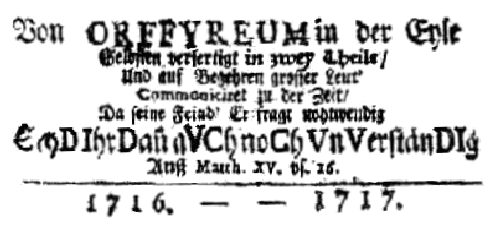
The Chronogram. In Germany at this time (1712), a popular way of establishing the date of construction of new buildings was the use of chronograms. A chronogram is a sentence or inscription in which specific letters, interpreted as numerals, stand for a particular date when rearranged. The word, meaning "time writing", derives from the Greek words chronos ("time") and gramma ("letter"). In the pure chronogram each word contains a numeral, the natural chronogram shows all numerals in the correct numerical order, e.g. AMORE MATVRITAS = MMVI = 2006.
Bessler used this device more than once, for instance on the front page of his publication called “Apologia Poetica” and on the last page. In this case he used a Bible quotation for his text - “...and Jesus said, do you still not understand”. Below is a copy of the actual text, and you can see the long line just above the Bible reference contains some letters which have been ‘Romanised’ to provide a date in Roman numerals. This date is 1717 as shown below (1716 - - 1717). If it ws just a chronogram it might not seem significant, but Bessler’s use of this particular phrase, ‘...and do you still not understand’ conveys a message to those who can read it. It suggests that there is something here that has not been understood. If somethinghas not been understood maybe we should search the document in question so that we can understand what we have missed.
I did this over a number of years and discovered numerous pieces of coded text and drawings and I have written a full account of my search and what I found in my forthcoming book “The Orffyreus Code - a Bluepring for Free Energy”
|